
Who Killed Helen Petrilyak? | 1970 Hazleton, PA Cold Case | NEPA True Crime
In August 1970, a Brooklyn waitress left for a weekend with family in her hometown of Tresckow, Pennsylvania.
- Victim: Helen Petrilyak, age 56 (also spelled Petrylak, Petrilak in some records)
- Last seen: Friday, August 14, 1970, leaving her Cobble Hill, Brooklyn home with a suitcase
- Found: Thursday, September 10, 1970, Jeanesville Slate Bank, between Hazleton and Tresckow
- Cause of death: Depressed skull fracture, right side of head; circumstances ruled suspicious
- Status: Unsolved.
- Pennsylvania State Police, Troop N Hazleton
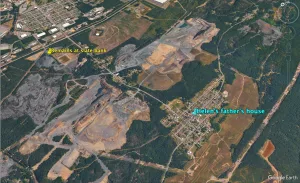
Four weeks later, she was found beneath a pile of brush at the Jeanesville Slate Bank, a mile and a half from her father’s front door.
Helen Petrilyak’s death has been described as one of Luzerne County’s oldest unsolved homicides.
Her suitcase turned up at a Hazleton playground before her body was found.
Her case file was reported lost in a flood, yet it still exists.
And in 2022, DNA solved a 1964 Hazleton murder, raising a question that has never been answered: was the same man involved here?
Who was Helen Petrilyak?
Helen was born in Tresckow, Pennsylvania, 2 miles south of Hazleton. Her parents, Anthony and Mary, immigrated from Eastern Europe in the early 1900s. Anthony worked as a coal miner until he retired. Helen was the oldest of four children, with siblings Mary, Anna, and Joseph. The family belonged to St. Mary’s Ukrainian Catholic Church in nearby McAdoo.
As the anthracite industry declined, young people left the region for work. At about 25 years old, Helen moved to Brooklyn. By 1970 she was living in Cobble Hill and working as a waitress at the Paradise Restaurant. She was unmarried and had no known children. Newspaper coverage told us almost nothing else about her.
Helen leaves Brooklyn with a suitcase to spend the weekend with her 78-year-old father on East Market Street in Tresckow. She never arrives.
Her brother-in-law travels to Brooklyn to look for her and confirms she was seen leaving home carrying a suitcase. Missing persons reports are filed in Brooklyn and Hazleton.
Boys playing at the St. Stanislaus ball field in Hazleton find a suitcase and scattered contents. One boy takes the empty case home, and his father throws it away at a stripping in the Milnesville area.
A heavy-equipment operator moves a clump of brush at the base of the Jeanesville Slate Bank and finds a body. He reports the find to Hazleton State Police.
Her sister Mary examines the clothing and jewelry and tentatively identifies the woman as Helen.
The suitcase is recovered from the stripping. Papers from the ball field include Helen’s name.
Dr. George Hudock confirms the identification and announces a depressed skull fracture. He calls the circumstances suspicious.
The Times Leader reports that a detective calls the case the oldest unsolved in recent times and says the records were swept away in the 1972 Hurricane Agnes flood.
The Luzerne County District Attorney’s office lists Helen’s case among unsolved homicides.
The discovery at the slate bank
The Jeanesville Slate Bank is a black mountain of what locals call slate: a mix of low-grade coal, rock, and dirt left behind when the coal companies shut down. In 1970, it was often used as fill for construction. A construction worker noticed a brush pile when he arrived at 8:00 a.m. and moved it around noon at his boss’s suggestion. At first, he thought he had found a deer.
The coroner estimated the woman had been dead four to six weeks. She was about five foot five, between 150 and 160 pounds, with dark brown hair streaked with gray. She still wore two rings and a watch. Reports differ on whether she was fully or partially clothed, but they list a dress, slip, bra, underwear, and stockings. Her shoes were found a short distance away. No suitcase was found at the slate bank.
A newspaper photo shows an arrow pointing at the brush pile. It also shows a detour road. Construction of the Hazleton Beltway had closed the normal route between Hazleton and Tresckow, so traffic in August 1970 was routed right past the slate bank.
The suitcase
The ball field where the suitcase was found is about 3 miles, or a 10-minute drive, from the slate bank. If it held clues, they were never made public. How it got there has never been explained.
What we know, and what we don’t
Documented
- Helen left Brooklyn on August 14, 1970 and never reached Tresckow.
- Her body was found September 10 at the Jeanesville Slate Bank.
- The coroner found a depressed skull fracture and called the death suspicious.
- Her suitcase was found at a Hazleton ball field and later recovered from a stripping.
- State Police confirmed in response to a right-to-know request that records, including an autopsy report, still exist.
Unknown
- How Helen traveled from Brooklyn to Hazleton.
- Who she met, or where she was between August 14 and her death.
- How her body reached the slate bank, and how her suitcase reached the ball field.
- What the suitcase contained.
- Whether any physical evidence survives for modern DNA testing.
The records that were supposedly lost
For decades, the apparent explanation for silence on this case was the Agnes flood of 1972.
I filed a right-to-know request with Pennsylvania State Police for information on the case.
They denied access to the investigative material, as expected, but their response confirmed the records exist. The case file was not washed away.
What remains unknown is whether any physical evidence survived.
I have also asked Hazleton State Police whether the case can be re-examined with the technology that solved the 1964 case. As of this writing, I have not received a response.
How did Helen get to Hazleton?
The public record does not say. One possibility is the Anthracite Express, a direct bus from New York City. One bus schedule listing says that on Fridays, it left NYC at 6:30 p.m. and reached its terminal on South Wyoming Street in downtown Hazleton at about 9:55 p.m., leaving Helen several miles from Tresckow, late at night. Did someone plan to meet her? Did she take a taxi or accept a ride? A local rumor mentions a taxi driver, but it is unverified.
A comparison worth examining
James Paul Forte has never been named a suspect in Helen Petrilyak’s death. The comparison below is an observation, not an accusation.
In 2022, Pennsylvania State Police announced that genetic genealogy had identified Forte, a Hazleton man who died in 1980, as the killer of nine-year-old Marise Chiverella in 1964. Police believe it is highly likely he committed other crimes. In 1970, Forte lived about a 10-minute walk from the ball field where Helen’s suitcase was found. Hazleton was a small town of about 30,400 people and ranked lowest in the nation for aggravated assault in 1969.
Laying the cases side by side, I noticed four points of overlap:
- Access: Marise Chiverella is believed to have accepted a ride from Forte, and a later surviving victim accepted a ride from Forte as well. How Helen reached the slate bank is unknown to the public, but it’s possible she accepted a ride from her killer.
- Location: Helen was found at an abandoned coal site, and the Chiverella child was found in an abandoned mine stripping. Forte’s 1974 victim was transported to a mining area.
- Injuries: Helen died of a blow to the right side of the head, and Marise also had injuries to the right temple. The 1974 victim also had head injuries.
- Shoes: In both the Chiverella and Petrilyak cases, the victim’s shoes were found a short distance from the body.
None of this proves anything. It is a reason to ask whether evidence from Helen’s case could be tested.
Another 1970 case
In November 1970, two months after Helen’s body was found, a 52-year-old woman told Hazleton police that two young men offered her a ride home at about 3:30 a.m. She said one attempted to rape and severely beat her, and she was left on Stockton Mountain Road near the Stockton Number 7 mining area. A passing motorist found her at 8:00 a.m.. I found no follow-up in the newspapers. It may be unrelated.
If you know something
Please contact Pennsylvania State Police, Troop N Hazleton, at 570-459-3890.
Help fill in the gaps
I’m looking for memories, photographs, and records connected to this case: the Anthracite Express terminal, the Beltway detour, the ball field at 17th and Hayes, or the Petrilyak family. You can reach me at nepatruecrime@gmail.com. I will ask before quoting anyone publicly.
Sources:
• “How a Mining Town Evolved Through Immigration,” George W. Bush Presidential Center, accessed June 1, 2026.
• “Bus Schedules Are Changed [Anthracite Express],” Standard-Speaker (Hazleton, Pennsylvania), January 5, 1962.
•“Work Is Begun on Heights-Loop Section of Beltway,” Standard-Speaker (Hazleton, Pennsylvania), ay 13, 1970.
•“New Service by Trailways,” Standard-Speaker (Hazleton, Pennsylvania), June 1, 1970.
• “Hazleton-Trescow Road Open to Emergency Vehicles Only,” Standard-Speaker (Hazleton, Pennsylvania), June 8, 1970.
• “Aggravated Assault Cases in Hazleton Are Lowest in U.S.,” Standard-Speaker (Hazleton, Pennsylvania), August 12, 1970.
• “Photo of Heights Road Link Being Built,” Standard-Speaker (Hazleton, Pennsylvania), August 13, 1970.
• “Find Woman’s Body Near Heights,” Standard-Speaker (Hazleton, Pennsylvania), September 11, 1970.
• “Woman’s Body Found under Brush near Hazleton,” The Evening News (Harrisburg, Pennsylvania), September 11, 1970.
• “State Police Continue Probe of Woman’s Death; Plan New Clinical Tests,” Standard-Speaker (Hazleton, Pennsylvania), September 12, 1970.
• “Suitcase, Clothing and Papers of Woman Discovered Dead Here Found by 3 Boys at 17th, Hayes,” Standard-Speaker (Hazleton, Pennsylvania), September 14, 1970.
• “Valise Belonging to Dead Woman Was Found by Boys 3 Weeks Ago,” Standard-Speaker (Hazleton, Pennsylvania), September 14, 1970.
• “Seek Cause of Her Death – Helen Petrylak,” Standard-Speaker (Hazleton, Pennsylvania), September 16, 1970.
• “Suspicious Circumstances Ruled in Woman’s Death,” Pottsville Republican (Pottsville, Pennsylvania), September 17, 1970.
• “Woman Died From Skull Fracture Under Suspicious Circumstances,” Standard-Speaker (Hazleton, Pennsylvania), September 17, 1970.
• “Dead Woman’s Skull Broken,” The Times Leader (Wilkes-Barre, Pennsylvania), September 18, 1970.
• “City Woman Tells Police Of Assault,” Standard-Speaker (Hazleton, Pennsylvania), November 9, 1970.
• “Woman Beaten After Rape Attempt Fails,” Standard-Speaker (Hazleton, Pennsylvania), November 9, 1970.
• “County Man Held Upon Girl’s Plaint,” The Times Leader (Wilkes-Barre, Pennsylvania), April 15, 1974.
• “State Police Charge City Man in Assault on Woman,” Standard-Speaker (Hazleton, Pennsylvania), April 15, 1974.
• “James Paul Forte Pleads Guilty to Aggravated Assault, Other Charges Not Processed.,” Standard-Speaker (Hazleton, Pennsylvania), September 19, 1974.
• “Probation for James Forte,” The Times Leader (Wilkes-Barre, Pennsylvania), October 3, 1974.
• “Obituary for ANTHONY PETRILYAK,” Standard-Speaker (Hazleton, Pennsylvania), January 26, 1977.
• “Mysteries: Helen Petrylak,” The Times Leader (Wilkes-Barre, Pennsylvania), May 5, 1991.
• “Murders Have Made Big Stories Pt 2,” Standard-Speaker (Hazleton, Pennsylvania), September 6, 1991.
• “County’s New DA Will Inherit Some Major Cases, Old and New,” Citizens’ Voice (Wilkes-Barre, Pennsylvania), January 1, 1992.
About this research
Researched and written by Alison Dimitirjevic, founder of NEPA True Crime, an independent investigative project on true crime cases in Northeastern Pennsylvania. Sources include period newspaper reporting, a Pennsylvania State Police right-to-know response, and historical records. Statements that are speculation are labeled as such.
Published October 5, 2026. Last updated October 5, 2026. Corrections and new information: Leave a comment here, or email nepatruecrime@gmail.com.
Frequently asked questions
Who was Helen Petrilyak?
Helen Petrilyak was born in Tresckow, Pennsylvania, the oldest of four children of immigrant parents. She moved to Brooklyn at about age 25 and worked as a waitress at the Paradise Restaurant. She was 56 when she died in 1970.
When and where was Helen Petrilyak found?
Her body was found on September 10, 1970, under a pile of brush at the Jeanesville Slate Bank, between Hazleton and Tresckow, Pennsylvania. It was about a mile and a half from her father’s home.
How did Helen Petrilyak die?
Luzerne County Coroner Dr. George Hudock determined she died of a depressed skull fracture on the right side of her head and called the circumstances suspicious.
Has Helen Petrilyak’s case been solved?
No. It is listed among Luzerne County’s unsolved homicides. No arrest has been made and no suspect has been publicly named.
Where was Helen Petrilyak’s suitcase found?
Boys playing at the St. Stanislaus ball field at 17th and Hayes Streets in Hazleton found her suitcase in late August 1970, weeks before her body was discovered. Police later recovered it from a stripping in the Milnesville area.
Is James Paul Forte a suspect in Helen Petrilyak’s death?
No. Forte, identified in 2022 through genetic genealogy as the killer in a 1964 Hazleton case, has never been named a suspect in Helen’s death. This site compares the cases only to ask whether physical evidence from Helen’s case could be tested.
Do police still have records from the case?
Yes. A 1991 newspaper article said records were lost in the 1972 Hurricane Agnes flood, but Pennsylvania State Police confirmed in response to a right-to-know request that records, including an autopsy report, still exist. Access to the investigative material was denied.
Who do I contact with information?
Contact Pennsylvania State Police, Troop N Hazleton: 570-459-3890.